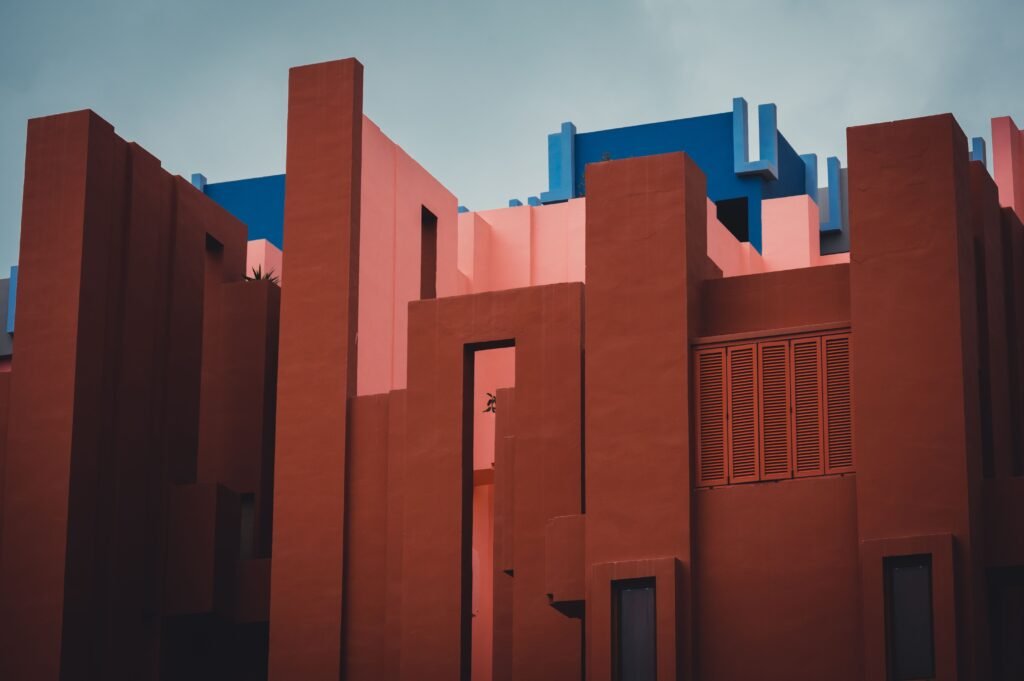
A friend of mine, who has zero interest in architecture normally, once sent me a photo of a pink wall with a single tree shadow falling across it and asked “what is this and why do I want to live there.” That was a Barragán building. No hesitation at all.
He was gone by 1988 Search “barragan architect” today, though, and the internet’s still full of people trying to explain what made his work hit different.
From Engineer to Something Else Entirely
He didn’t study architecture in a traditional sense. Barragán trained as a civil engineer back in Guadalajara, which honestly explains some of his precision with structure and walls. The architectural sensibility came later, mostly through travel rather than a classroom. A trip through Spain and North Africa in the late 1920s left a mark — the walled courtyards, the enclosed gardens, the way those spaces felt private even though they weren’t hidden.
When he got back to Mexico, he didn’t try to recreate what he’d seen abroad. He blended it with older regional building habits — thick adobe-style walls, quiet courtyards, water features borrowed from haciendas nobody was romanticizing at the time.Somebody eventually coined the term Mexican Modernism for what he was doing. He probably would’ve shrugged at that — the guy never really struck anyone as the movement-founding type
The Pritzker Prize came in 1980. No other Mexican architect has won it since.
The Details That Give His Work Away
You could probably pick a Barragán building out of a lineup, even a bad one. A few reasons why:
The color choices aren’t cosmetic. A magenta wall in his work isn’t there to look nice next to the furniture — the wall practically becomes the room’s main character.
Street-facing walls tend to be tall, blank, sometimes without a single visible window. It reads as unfriendly at first, until you understand the goal was keeping the outside world’s noise out entirely.
Water shows up as something calm, not decorative. Long troughs, still pools, nothing that sprays or performs. It’s there to slow a visitor down.
Light gets treated almost like brick or wood — something he could shape and direct, using narrow openings or colored glass so a room’s mood shifts depending on the hour someone walks through it.
His own home and studio in Mexico City — now a UNESCO World Heritage Site — is the clearest single example of all this working together. Nothing about the exterior prepares you for what’s inside. Visitors regularly describe it as more of a feeling than a floor plan.
Why Any of This Matters Outside Architecture School
If you’re not designing museums for a living, here’s the useful part: Barragán basically proved that doing less, deliberately, beats doing more, carelessly. One well-placed colored wall changes a room’s entire personality more than a dozen mismatched finishes ever could.
That’s not really a design trend borrowed from him — it’s closer to a rule he kept proving, house after house, for most of his working life.
A Few Sites Worth Visiting in Mexico City
If you’re planning a trip and want to see this firsthand rather than take it from a blog post:
Casa Luis Barragán, his personal home and studio — reserve a tour ahead of time, it books up.
Casa Gilardi, known for the indoor pool bathed in yellow light most afternoons.
Cuadra San Cristóbal, a private equestrian estate with arguably the most photographed pink wall in modern design.
Torres de Satélite, a public collaboration with artist Mathias Goeritz, visible from the road for anyone tight on time.
None of them are loud tourist attractions. You have to slow down for them to land, which tracks, given everything else about the man’s approach.
Bottom Line
Strip away the museum plaques and the Pritzker mention, and what’s left is a fairly stubborn idea he kept repeating: quiet spaces can carry real weight. Color does emotional work. Shadow and water outperform furniture nine times out of ten.
Whenever people bring up a barragan architect influence on modern design, this is usually the point they land on — restraint done well beats size almost every single time.