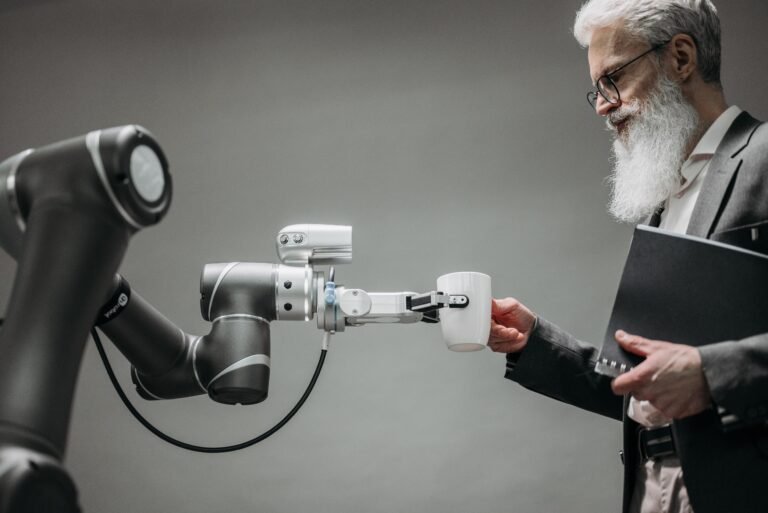
My cousin manages a warehouse in Ohio. Last week she told me her scheduling software now flags shift conflicts before they happen — something a person used to catch, if they were lucky, by Thursday afternoon. She barely reacted, honestly. Shrugged, said something like ‘saves me a headache,’ and went back to work. ” That seems to be the general feeling around AI these days, at least from what I’ve seen.” Not awe. Not panic. Just… it’s here, and it’s doing stuff.
That’s really what this article is about. Tech companies love showing off their demos. I’d rather talk about what’s actually happening on the ground, in jobs nobody writes press releases about.”
Separating Real Progress From Marketing Noise
Every few weeks some company announces a “revolutionary” update. Most of it is noise. A chatbot that writes marginally better poetry isn’t going to change your Monday.
Here’s what’s genuinely different, though.
Models can now hold a thought across several steps instead of answering once and quitting. Ask an older AI tool to plan a product launch and it’d spit out a list. Ask a newer one, and it’ll actually work through the sequence — draft the plan, check itself, adjust if something doesn’t add up. It’s not perfect. But it’s a different kind of tool than what we had two years ago.
Then there’s the agent stuff — AI that stops talking and starts doing. Filling out forms. Editing spreadsheets. Sending calendar invites. A person still needs to check the work, but the amount of manual clicking has dropped for a lot of office tasks. I’d argue this is the change people will look back on as the real turning point, more than any chatbot upgrade.
And quietly, almost as an afterthought, smaller AI models have gotten good enough to run on a regular laptop instead of a data center. Doesn’t sound exciting. But if you run a small business and can’t afford enterprise software licenses, this matters way more than whatever’s trending on tech Twitter.
You’ve Probably Already Bumped Into This
This isn’t just a tech-industry thing — you’ve probably already noticed it wherever you work. . It shows up in strange little places.
Customer support lines resolve more issues without ever routing to a person. Recruiters get a shortlist before they’ve had their morning coffee. An analyst who used to burn two days building a report now spends that time actually interpreting the numbers, because the first draft basically builds itself. Developers move faster too — though talk to any experienced one and they’ll tell you the actual hard decisions, the architecture calls, still need someone who’s broken enough production servers to know better.
None of this is “robots taking jobs.” It’s closer to the boring 60% of a job quietly evaporating, leaving behind the parts that actually required a brain in the first place.
Here’s What Barely Gets Talked About
AI tools are wrong constantly. And they never sound unsure about it.
That’s the part that should actually concern you more than job loss headlines. A reasoning model can march through five confident-sounding steps and land somewhere completely off base — with the same tone it’d use if it were correct. There’s no hesitation in the voice. No “I think” or “not totally sure, but.” Just certainty, misplaced or not.
If your work touches money, health records, contracts, anything where a mistake actually costs something — don’t skip the verification step because the output reads smoothly. Smooth and correct are not the same thing.
Ask yourself, before trusting anything AI hands you:
Would I be okay walking my manager through this if it went sideways? Honestly, did I even check the number, or did it just look right so I let it go? Is there a person in the loop who’d actually catch this before it blows up? ?
If you hesitate on any of those, that’s worth paying attention to.
Staying Current Without Losing Your Weekend to It
Nobody needs to learn every tool that launches. Genuinely — trying to track everything just makes people anxious and doesn’t make them better at their jobs.
What actually works better: pick one or two tools that fit what you already do, and get properly good at those instead of dabbling everywhere. Spend fifteen minutes a week catching up on what’s changed instead of endlessly scrolling AI news at midnight. Ask whoever on your team already uses this stuff well — their answer will beat any product page. And pay attention to your specific field. A medical AI breakthrough means nothing if you work in freight.
Where This Is Probably Going
Assuming the pace holds, expect the repetitive parts of office work to keep shrinking over the next couple years. Drafting. Scheduling. First-pass analysis.That’s not going anywhere. I mean the judgment you only get from making a real mistake once. The trust that comes from just showing up for years. And, maybe rarest of all, someone actually willing to say ‘I got this wrong.’
Here’s the thing — the people doing best with this stuff aren’t necessarily the heaviest users. They’re just better at spotting when it’s wrong, and they don’t skip the double-check just because the answer sounds sure of itself.