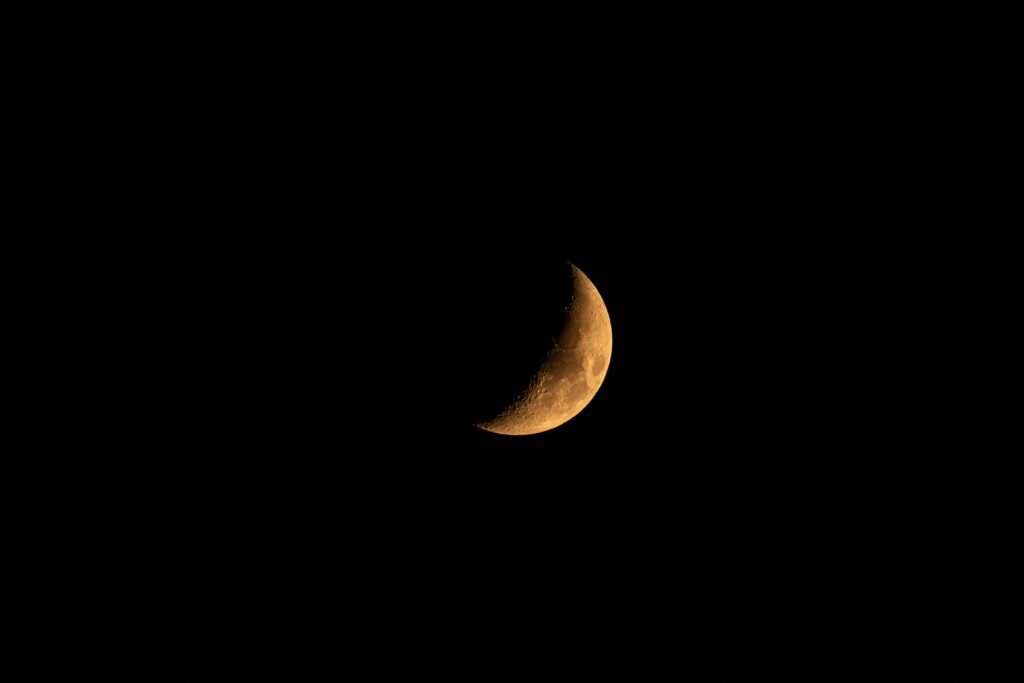
I noticed it by accident, actually. Walking to my car around 6 a.m., half-asleep, and there was this thin curl of light just sitting above the rooftops. Not the dramatic full moon everyone photographs. Just a sliver. Turns out that’s the waning crescent moon, and once you know what it is, you start seeing it everywhere, mostly because nobody else is looking up that early.
So What Actually Is It?
Quick breakdown. The moon goes through phases because of where it sits between us and the sun, and “waning” just means it’s shrinking, not growing. “Crescent” means less than half is lit up. So a waning crescent is that final skinny curve before the moon goes dark completely and the new moon phase kicks in.
It sticks around for maybe three or four nights. Comes right after the last quarter moon. And here’s the thing that trips people up: it rises before dawn, not at night. So if you’re waiting to see it after dinner, you’re not going to.
Why Most People Miss It Completely
Honestly? It’s not built for visibility. A few reasons:
- It shows up close to sunrise, and daylight drowns it out fast
- There’s barely any of it lit, sometimes it’s just a thread of light
- It hangs low near the horizon, so a fence, a tree, whatever, can hide the whole thing
I’ve missed it plenty of mornings just because I forgot to check the direction. East. That’s the move. Not up, not west. East, low, early.
The Actual Science (No Mysticism Required)
The moon doesn’t glow on its own. It’s bouncing sunlight back at us, and how much we see depends purely on angles, where the moon sits relative to Earth and the sun on any given day. As it swings closer to lining up directly between us and the sun, less of the lit side faces our direction. That’s it. That’s the whole mechanism. No magic, just orbital mechanics doing what they do every single month like clockwork.
Once it lines up completely, you get the new moon, total darkness, at least from our point of view. The waning crescent is really just the last stop before that blackout.
What People Do With This Phase
Now, I’m not big into moon rituals myself, but I looked into why so many people treat this phase as meaningful, and there’s a logic to it even if you’re skeptical.
The idea is basically this: it isn’t the time to launch something new. Save that for the new moon. This phase is more about closing things out. Finishing what’s unfinished. Letting energy drop instead of forcing it up.
People use it for:
- Winding down instead of pushing through, since energy tends to feel lower anyway during this window
- Clearing out old habits or grudges before the reset
- Sitting with your thoughts rather than chasing new plans
You don’t have to believe in lunar energy to appreciate the underlying idea. Rest before restart isn’t a bad rule of thumb regardless of what the sky’s doing.
If You Actually Want to See One
Don’t overthink this. Pull up a moon phase app, figure out the date (it moves every month, so don’t guess). Set an alarm for maybe an hour before sunrise. Go find a spot facing east where nothing’s blocking the horizon. A parking lot works better than your backyard if there’s a fence in the way.
Give it a minute once you’re out there. Your eyes need to adjust, and the crescent can look almost invisible against a sky that’s already starting to lighten. You don’t need binoculars. Once you spot the shape, you’ll know exactly what you’re looking at.
Why Bother
It’s not flashy. Nobody’s setting alarms across the internet to photograph it like they do for a supermoon. But there’s something kind of nice about catching the moon right before it disappears for a night or two, watching an ending happen exactly on schedule, without drama, without announcement.
Next time you’re up early and the sky’s still got some dark left in it, glance east. The waning crescent moon might be right there, doing its quiet thing, waiting for someone to actually notice.